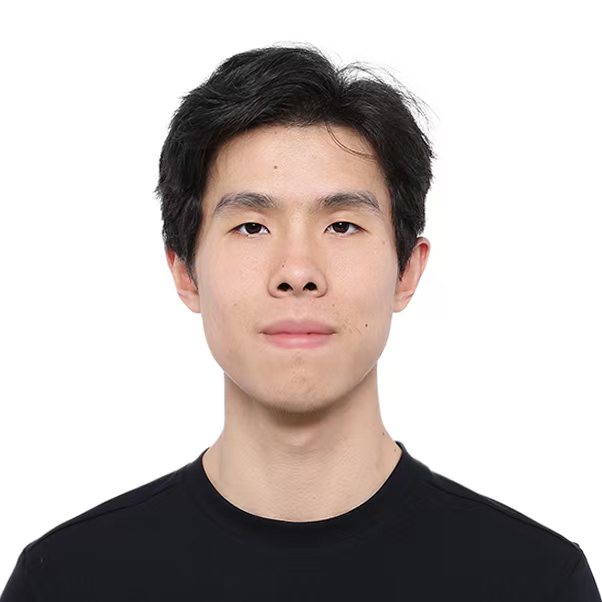
Weitong Qian钱韦潼
Undergraduate · Peking University · Incoming School of Computer Science Student
I am an undergraduate (Class of 2027) at Peking University, College of Engineering (COE), and will join the School of Computer Science at Peking University.
I work on using AI to build AI: developing systems in which AI accelerates, automates, and extends the very process by which AI is created and deployed.
I am interested in turning AI inward on its own stack — the infrastructure it runs on, the algorithms that train it, the research process that produces it, and the physical embodiments through which it acts.
My research spans four layers of this stack:
-
01
AI for AI Infrastructure Agents that write and optimize the code AI runs on.
-
02
AI for AI Algorithms LLM-guided search for ML pipelines and hyperparameters.
-
03
AI for AI Research Agent systems that compress the literature-to-publication loop.
-
04
AI for the Physical World Embodied agents and world models that extend AI's reach beyond the screen.
Leadership & Service/ 01
- President, PKU Jiangsu Students' Association (Suyun, 苏韵) 2025 – Present
- Class President, PKU Engineering Science, Class of 2027 2024 – Present
Publications/ 02
Projects/ 03
01AI for AI Infrastructure
An open-source agent system that autonomously writes, profiles, and optimizes CUDA kernels — pushing AI further down its own software stack.
02AI for AI Algorithms
LLM-guided Monte Carlo Tree Search for the Combined Algorithm Selection and Hyperparameter optimization (CASH) problem. We use the LLM as a structural prior over the pipeline space, making Bayesian optimization dramatically more sample-efficient.
03AI for AI Research
A memory-centric agent system for the full scientific research lifecycle — from literature ingestion and idea generation to experiment execution, manuscript writing, and reviewer rebuttal. Structured persistent memory separates reusable knowledge from project-level artifacts; a feedback-driven self-improvement loop converts experiment outcomes and review signals into versioned updates to skills and memory, so the system compounds across projects.
An AI research-onboarding tool, built on the OpenClaw skill platform. Given a topic, it constructs a self-contained, growing knowledge base — field overview, foundational and frontier papers, peer reviews, knowledge graph — that a newcomer can converse with directly.
04AI for the Physical World
Vision-based, RL-driven non-prehensile grasping; RL controllers for stable and adaptive locomotion on quadruped and biped robots over varied terrain. Advised by Prof. He Wang.
A system in which embodied AI agents autonomously plan and conduct scientific experiments — research automation extended into the physical world.
Experience/ 04
Building AI systems for research automation, ML optimization, and AI infrastructure.
Research on vision-based, RL-driven non-prehensile grasping; RL controllers for legged robots. Advised by Prof. He Wang.
Awards/ 05
Competitions & Recognition
- 2026 Top 100 Nationwide, WAIC 2026 Future Tech OPC — for AutoSci
- 2026 2nd Prize, Academic Track, Zhongguancun Lobster Hackathon — for FrontierPilot
- 2025 3rd Prize, Beijing "Challenge Cup" Undergraduate Academic Competition — for AI Robot Scientist System
- 2025 3rd Prize, PKU Challenge Cup
- 2024 First Prize, National Undergraduate Mathematical Contest in Modeling
Scholarships & Honors
- 2025 PKU POSCO Scholarship
- 2025 PKU Xia Shouyu & Huang Yucen Undergraduate Internship Scholarship
- 2024 PKU BYD Scholarship
- 2024 / 25 PKU Merit Student
News/ 06
Friends/ 07
- Lowkeyyyy @ NJU — thoughts on software engineering, ML, and creative coding.
- Wangjie Su @ PKU — interested in applying neural networks.
- skywalkjian @ PKU — majoring in computer science.
- Hao Ni @ PKU — interested in quantum computing, engineering optimization, fluid mechanics, and Physical AI.